
Deeper skin doesn't fade dark spots like pale skin.
You were scrubbing the surface. On skin like yours, the colour locks in underneath.
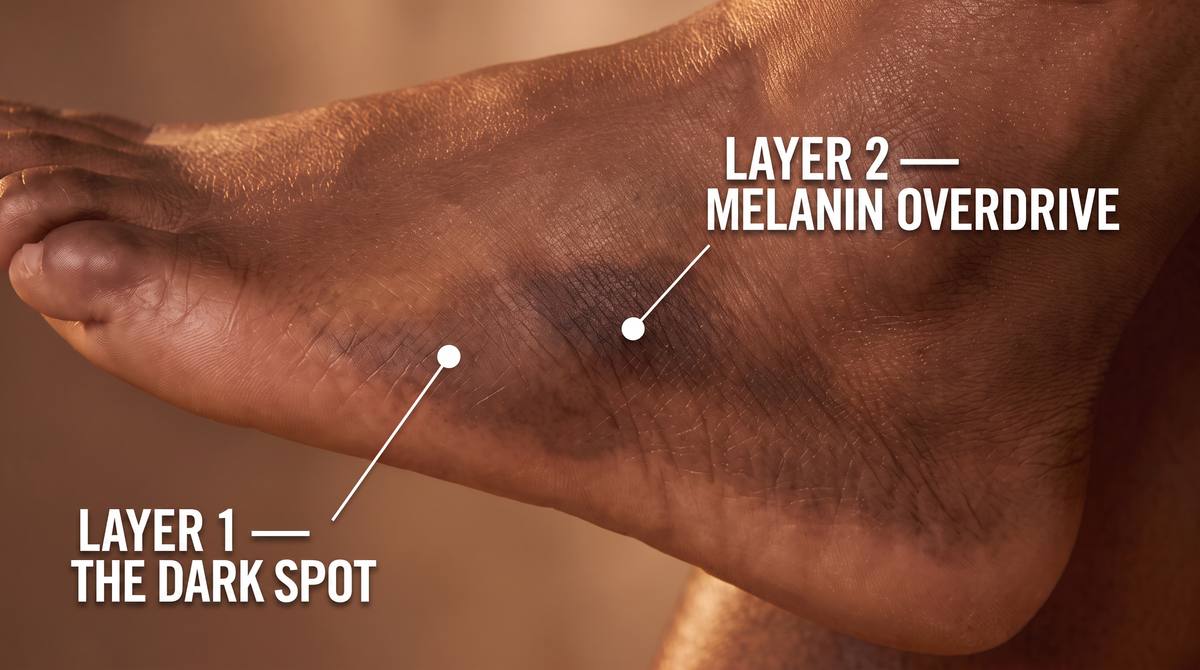
Start the routine tonight, and give your skin a full summer to change.
in Korea
money-back
What you'll learn
Read in 5 minutes
01 - Why your dark spots are "locked in" — and most feet aren't
02 - Why foot peels and scrubs never stood a chance
03 - Why kojic soap and bleaching creams make it worse
04 - Retinal: the retinoid that works on the lock, gently
05 - 150ml: enough to treat feet, and keep treating them
06 - The honest timeline, week by week
07 - Our 90-day promise, in plain words
It was never that your feet are dirty or harder to fix. You were handed tools for the surface — not the lock.
01. Why your dark spots are locked in — and most feet aren't
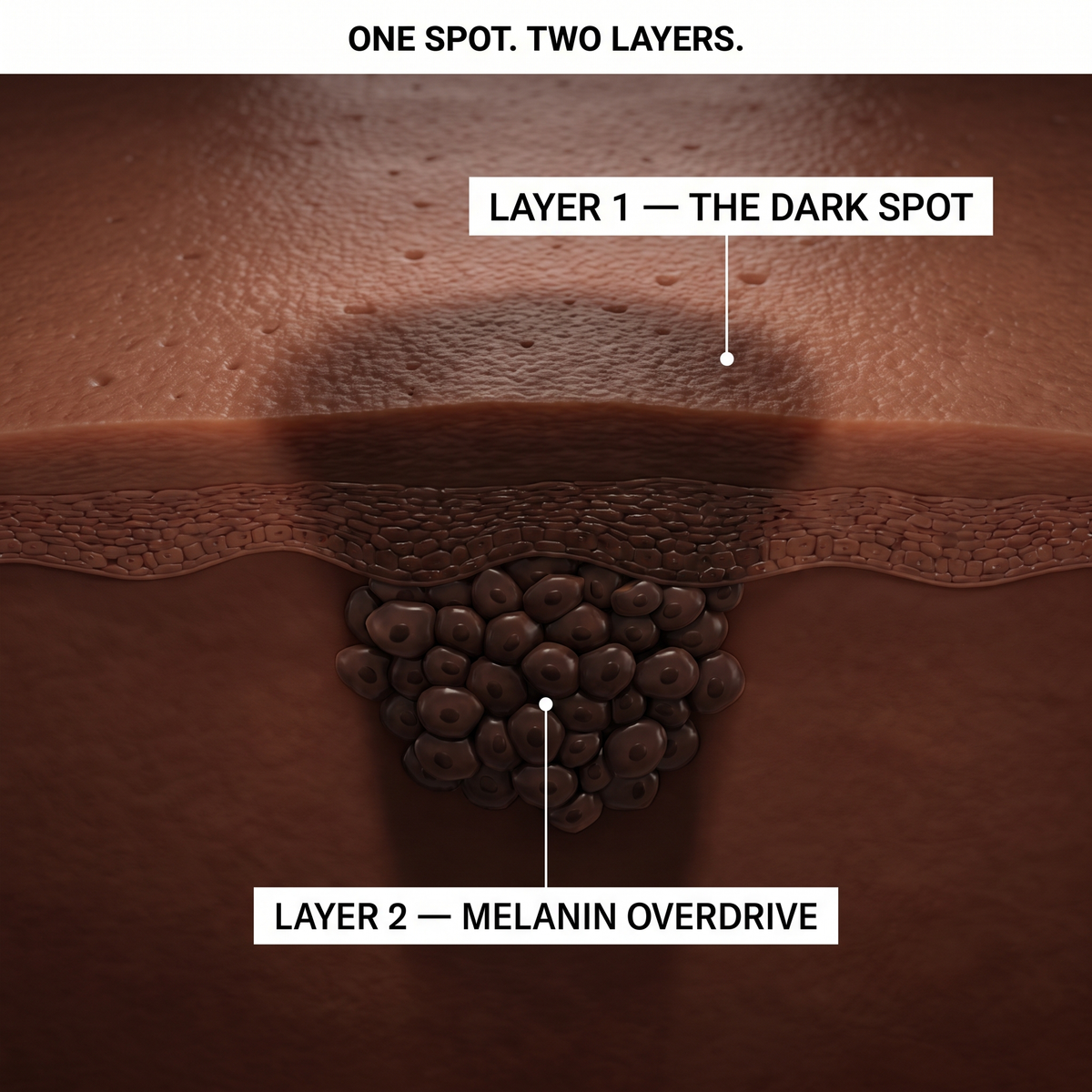
Every foot rubs inside a shoe. That friction tells the skin to make pigment. Call that the trigger.
On most skin, the pigment is mild. It fades once the rubbing eases, and skin evens back out.
Melanated skin reacts harder. Your pigment cells fire off more colour — and keep firing long after the friction stops.
So the colour sits deeper, holds longer, and switches back on with your next pair of shoes.
That's the Melanin Lock. Not dirt, not dead skin — pigment your skin keeps re-making and holding onto.
Everyone's feet darken from friction. Only melanated skin locks the colour in — and keeps re-making it.
02. Why foot peels and scrubs never stood a chance
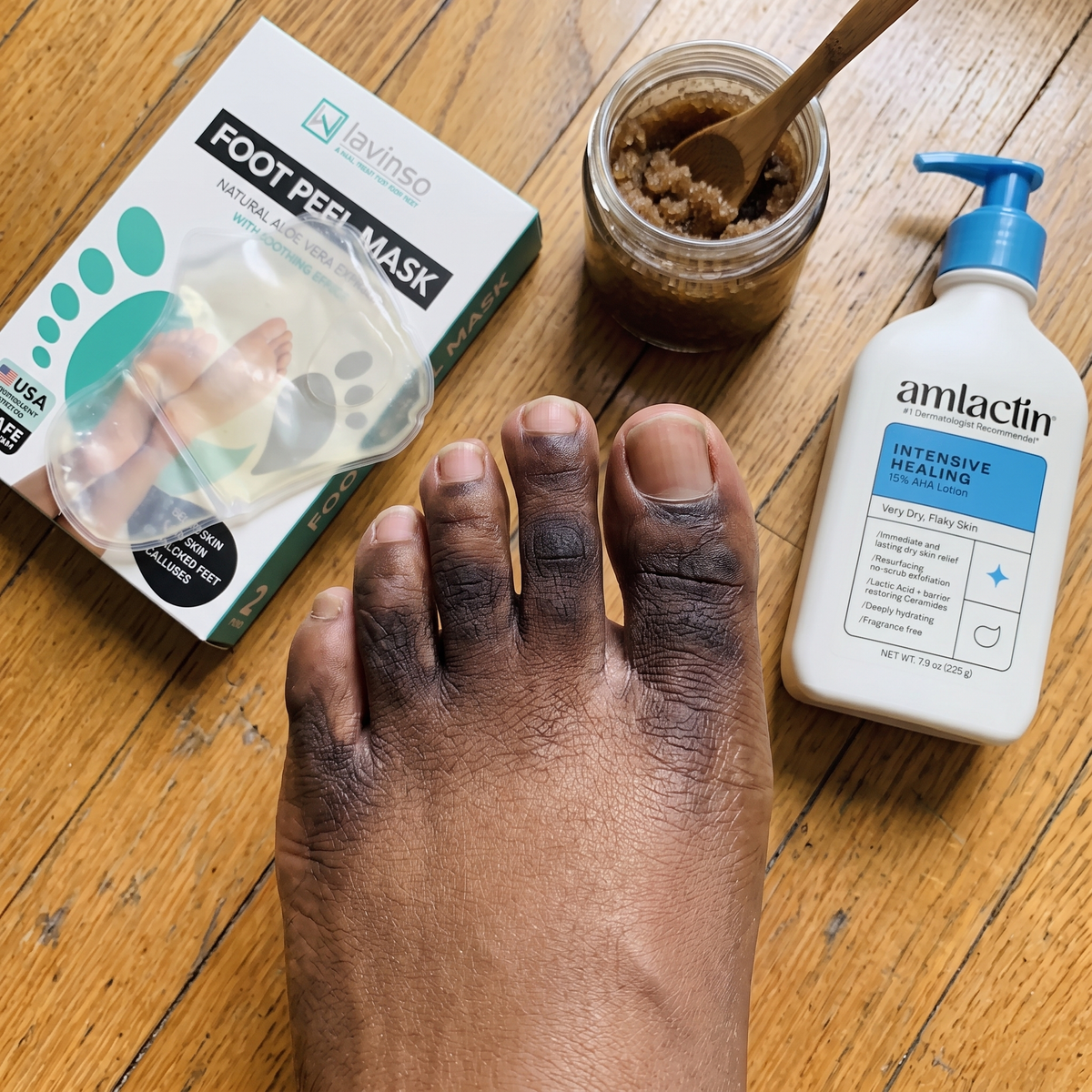
Think about what you have already reached for. A foot peel. Sugar scrubs. A pumice stone. Glycolic on the rough spots.
They all do the same one job. They strip dead skin off the top and smooth the surface.
For a week or two, your feet look and feel brand new. Then the colour creeps back.
Women stuck on this exact problem say it every time. The peel helped a little, but it never lasted — still dark, just a shade less.
That is the tell. Peels reach the surface. The lock sits beneath it. So the dark spots keep coming back.
03. Why kojic soap and bleaching creams make it worse
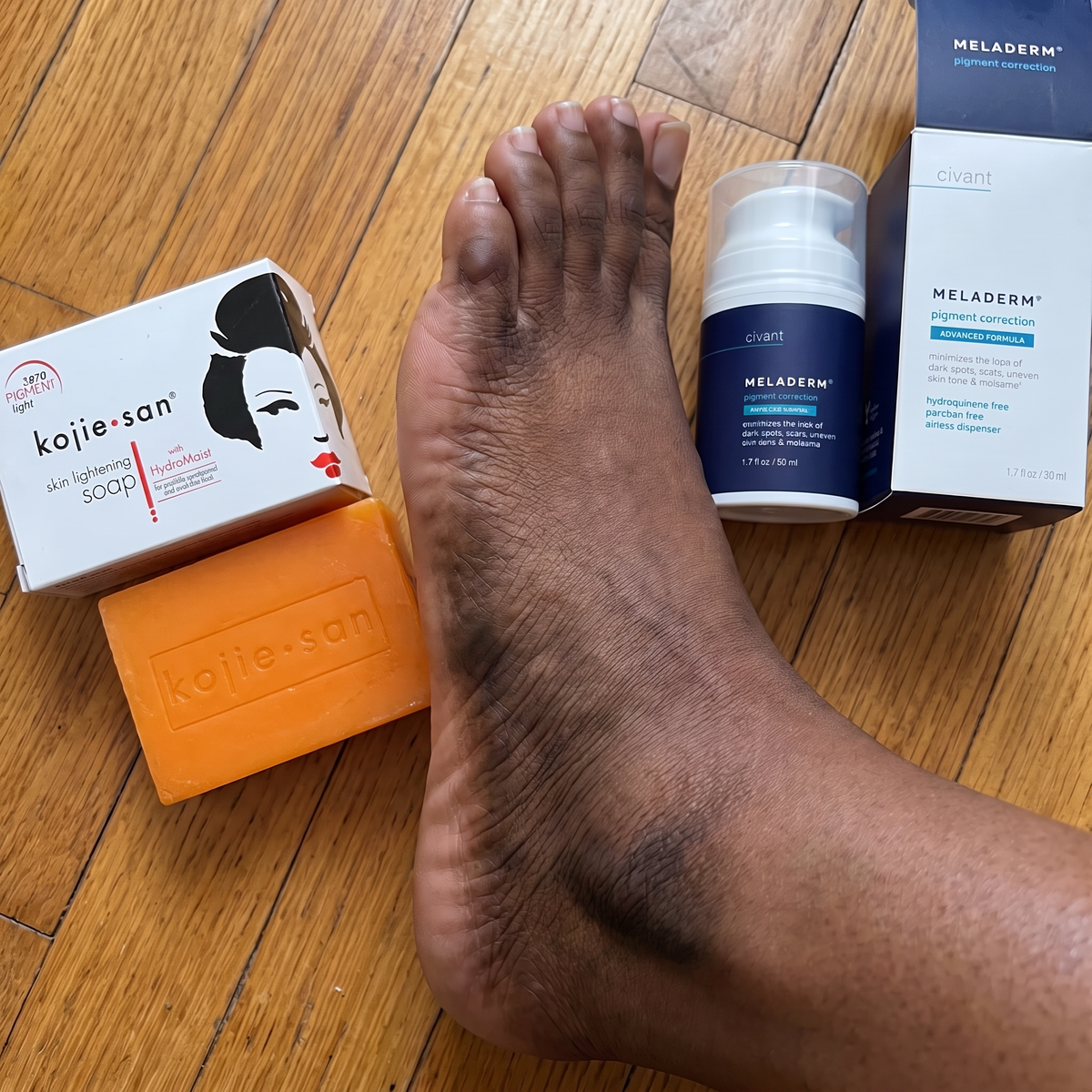
When peels stop working, the next move is to attack the colour. Kojic soap. Bleaching creams. Hydroquinone. "Dark-spot removers."
On paper, fading the colour sounds like the direct route.
The trap is the reaction. Strong lighteners and harsh acids irritate the skin. On melanated skin, irritation makes more pigment.
So the very thing meant to fade the spot can tighten the lock instead. Some also leave pale patches that never match back.
The problem is not fading pigment. It's forcing it, on skin that answers irritation by making more colour.
04. Retinal: the retinoid that works on the lock, gently
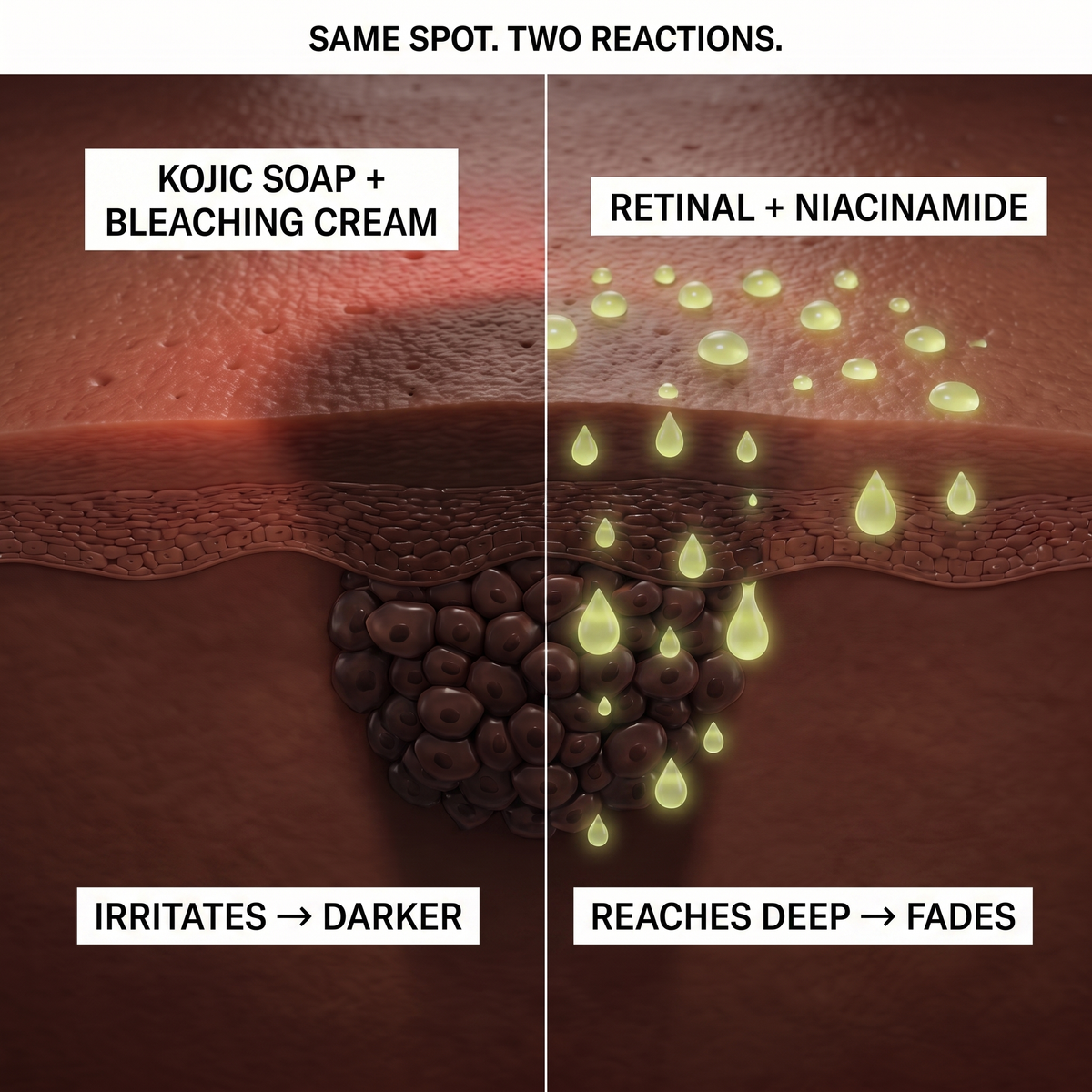
Here is the part almost no one explains. Retinol and retinal are not the same thing.
Your skin cannot use retinol directly. It has to convert it in two steps before it works.
Retinal is one step from active. One conversion, not two — so it works sooner, at a gentler dose.
Paired with niacinamide, it evens the look of the locked pigment. Centella keeps the skin calm.
That is exactly what the lock needs: something that reaches the pigment, without the irritation that feeds it.
Scrubs only reach the surface. Bleaches only feed the lock. Retinal reaches the pigment — in one step, not two.
05. 150ml: enough to treat feet, and keep treating them
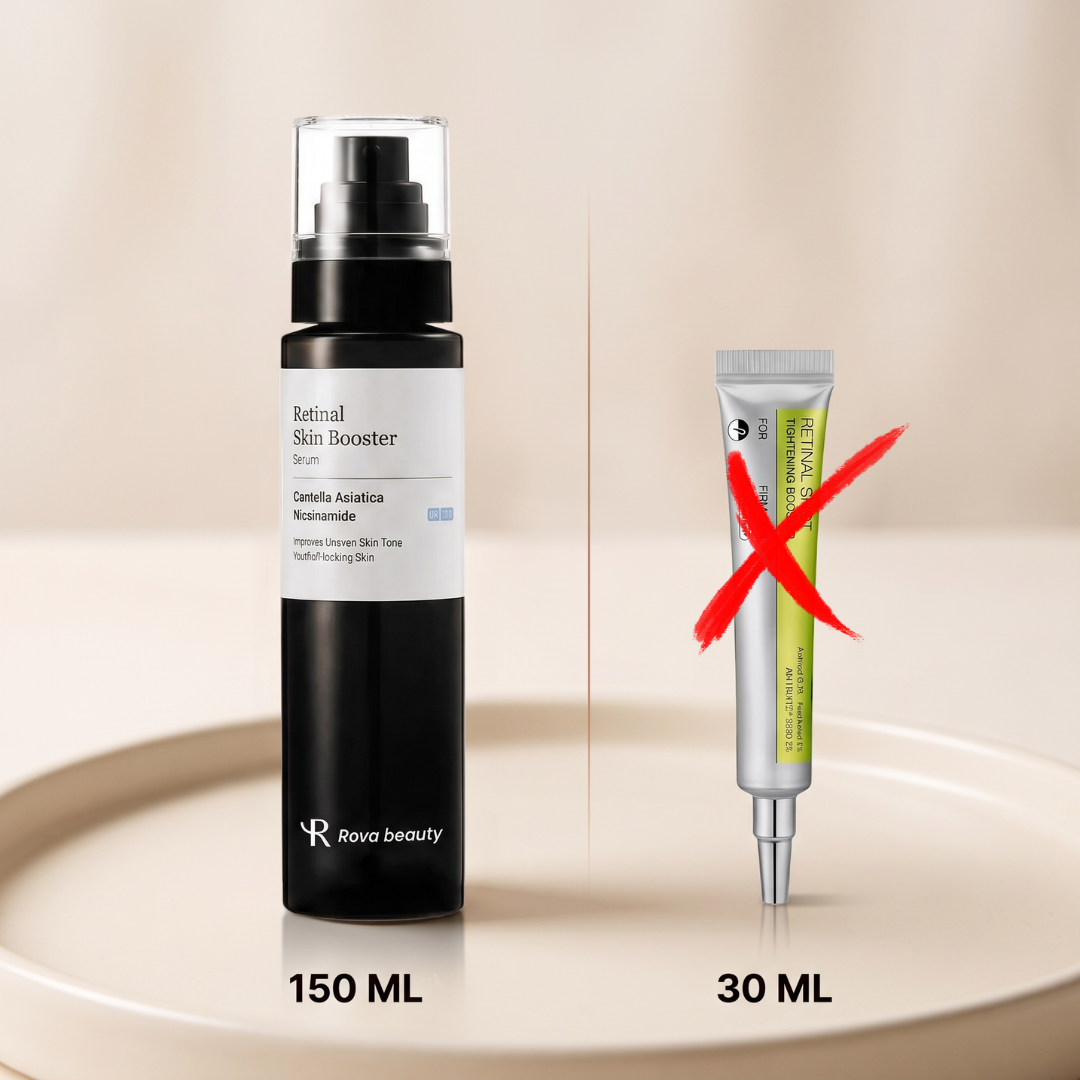
A face serum is 30ml. It is built for a small area, used a drop at a time.
Feet are bigger, and the skin is thicker. You need more product, and you need it more often.
And here is the honest part. The friction never stops. Every pair of shoes re-triggers the lock.
So this is not a one-off cure. It is a routine you keep — and a 30ml bottle runs out long before it works.
150ml is built for that. Enough to treat both feet nightly, and enough to keep the colour from creeping back.
06. The honest timeline, week by week
This softens how the spots look. It does not strip the colour off overnight.
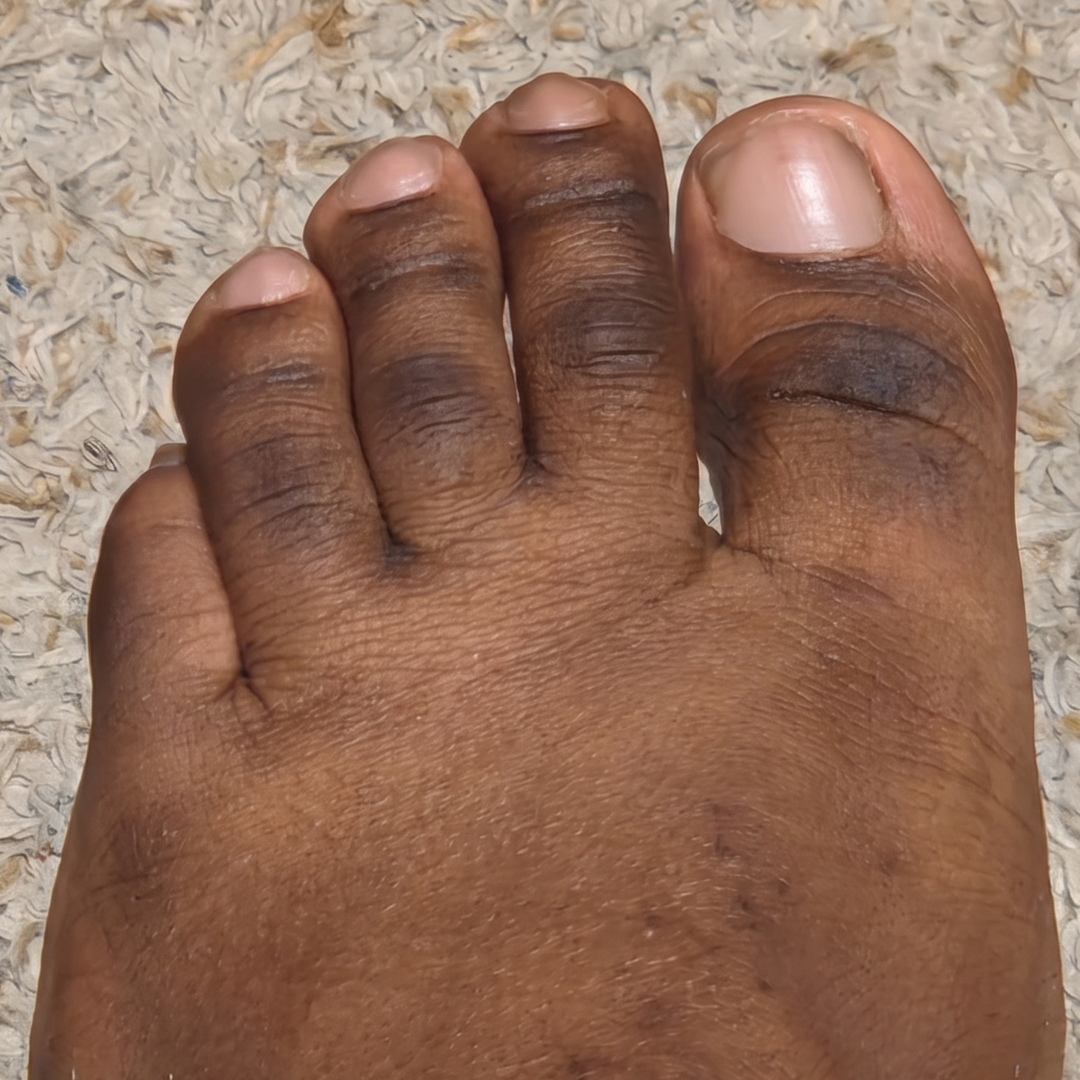
Weeks 1-3. Skin settles and the surface smooths first. The colour has not shifted yet — that is normal.
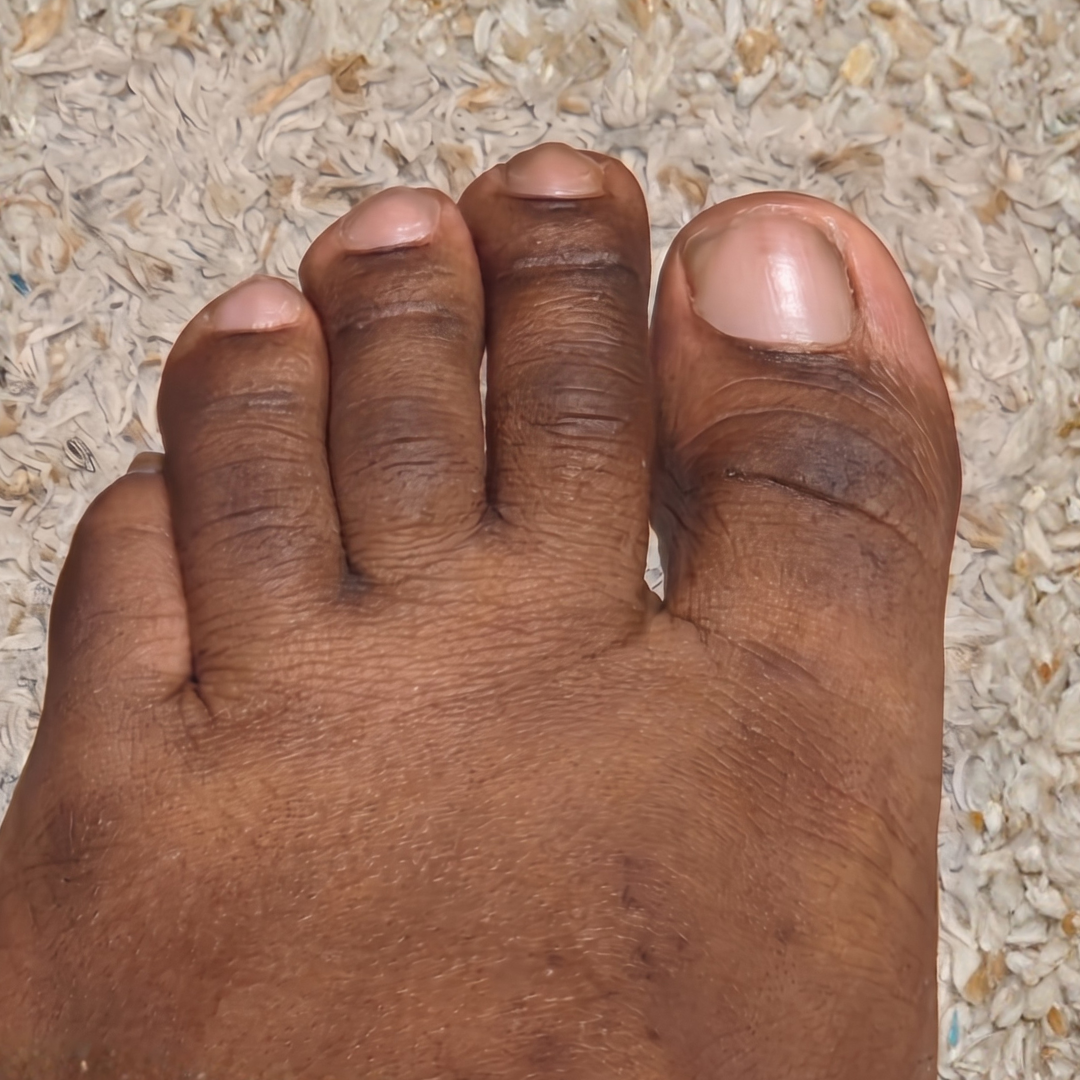
Weeks 4-6. The spots start to lift. Edges blur and begin to sit closer to your natural tone.
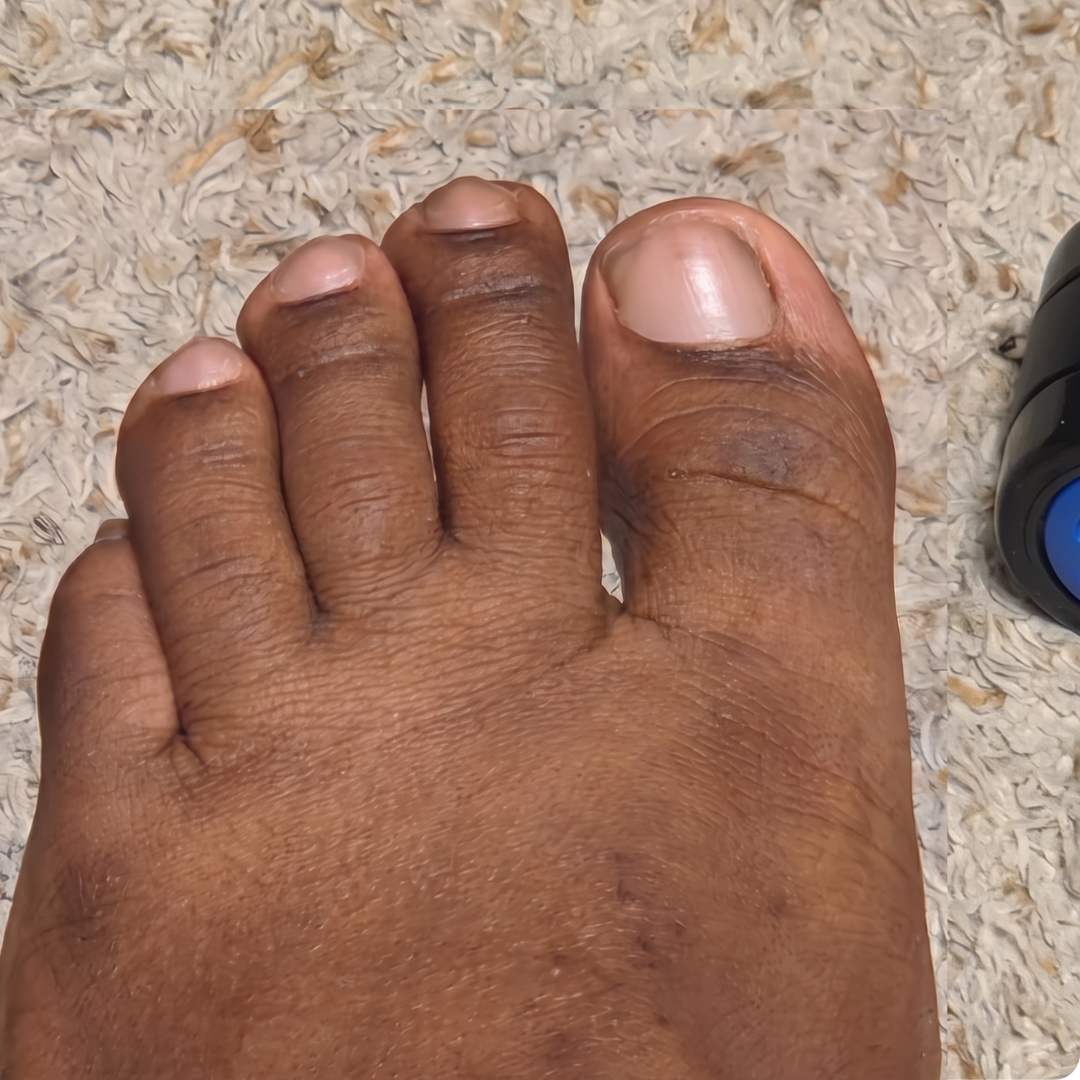
Weeks 7-9. This is where most of the visible change lands, if you use it nightly.
One honest note. Friction keeps working against you — so keep going, and keep your shoes comfortable.
07. Our 90-day promise, in plain words

Real results need real time. So we back the routine for a full 90 days.
Use the bottle nightly. Give it the twelve weeks above. If your spots do not look visibly softer, email us for your money back.
We ask for 90 days because that is how long the skin needs. A shorter promise would just be a shorter promise.
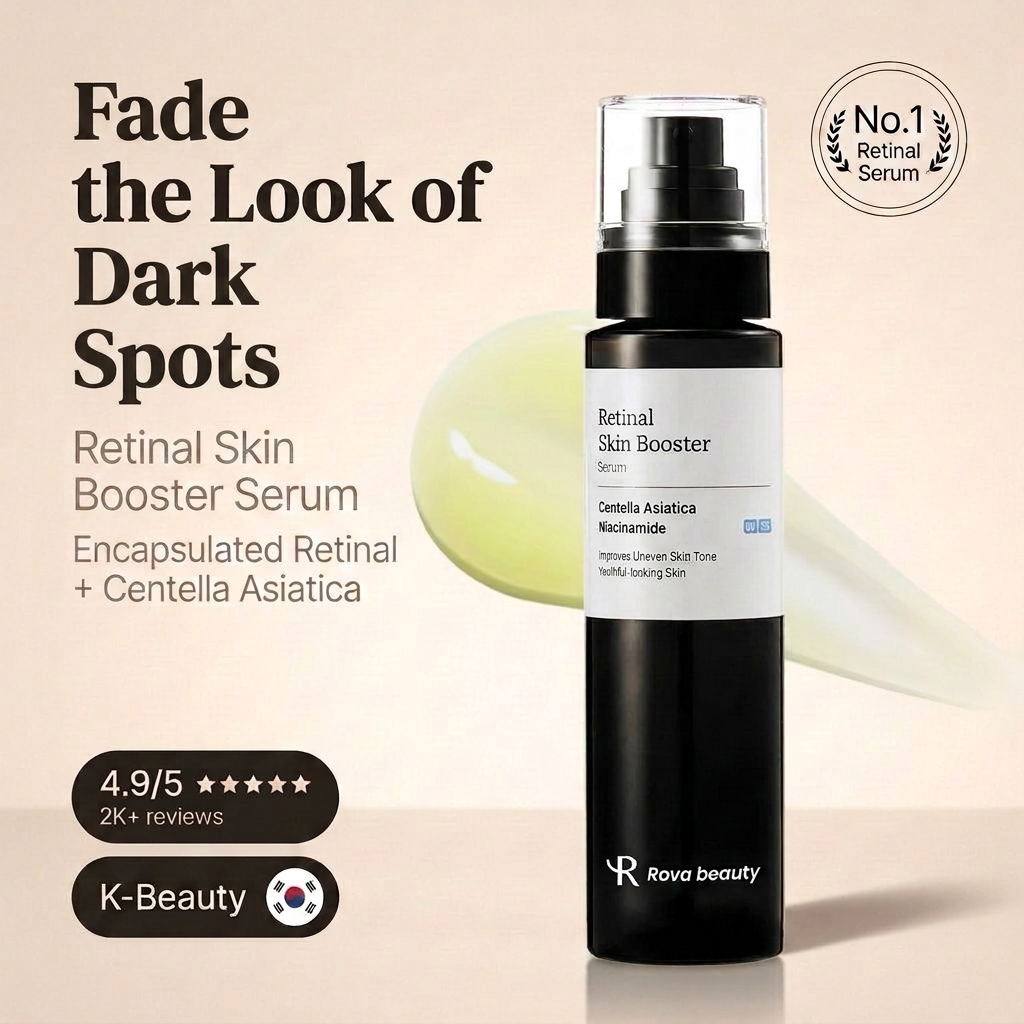
The Melanin Lock Retinal Skin Booster
✓ Retinal — works on the locked pigment
✓ Niacinamide — evens dark spots
✓ Centella Asiatica — keeps skin calm
✓ 150ml body size — enough for both feet
Why not the others?
 Rova
RovaRetinal 150ml |
 Peels
Peels/ scrubs |
 Kojic /
bleaching |
 30ml face
serum |
|
|---|---|---|---|---|
| Smooths surface (dead skin) | ✓ | ✓* | ✗ | ✓ |
| Works on the pigment (the Melanin Lock) | ✓ | ✗ | risk | sometimes |
| Body-sized amount | ✓ | ✓ | varies | ✗ |
| Conversion steps | 1 | – | – | 2 |
| Gentle on deeper skin | ✓ | ✓ | ✗ | varies |
| Built for the Melanin Lock | ✓ | ✗ | ✗ | ✗ |
*Surface only — smooths texture, not the dark spots. Scroll to compare →
Before you decide
The honest answers to what you're really wondering about retinal.
Why are my toes and knuckles darker than the rest of my foot?
It's friction. Shoes and socks rub the same spots every day, and your skin answers by making pigment there. On deeper skin, those pigment cells over-react — they make more, and hold it deeper. That's the Melanin Lock, and it's why the darkening sits on the knuckles and where shoes press.
How do I know if mine will actually fade?
This is for the uneven dark spots — the patches that sit clearly darker than the skin around them, over the knuckles and along the sides. Some all-over darkening on deeper skin is just your natural tone, and that's normal, nothing to fix. It's the uneven friction spots that soften and blend with the routine.
Will this lighten my skin or leave pale patches?
No. This is not a bleach or a lightener. It evens the look of the dark spots against your own natural tone. It won't change your skin colour, and it isn't designed to lift pigment or leave lighter patches.
Will the dark spots just come back?
Only if the friction keeps going unchecked. Every pair of shoes re-triggers the lock, so this works as a routine you keep up, not a one-off. That's exactly why the bottle is body-sized — enough to keep the colour from creeping back.
I've already tried peels and kojic soap. How is this different?
Peels only smooth the surface, so the colour comes back. Kojic and bleaches can irritate skin that already over-reacts — and irritation makes more pigment. This is a retinal that reaches the pigment gently, in one conversion step, with niacinamide and Centella to keep skin calm. It's body-sized, and backed for 90 days.
Will it fit my routine?
Yes. Cleanse, apply at night, moisturise on top. Wear SPF on exposed skin — every retinoid makes skin more sun-sensitive.
Can I use it while pregnant or breastfeeding?
No. Retinoids aren't recommended during pregnancy or breastfeeding. Please wait until after, and speak to your doctor.
Deeper skin doesn't fade dark spots like pale skin. This treats what's actually locked in.
One body-sized bottle. Retinal for the pigment, niacinamide to even the look, Centella to keep skin calm. 90 days to see your spots fade, fully backed.
-
SUMMER OFFER - BUY 1, GET 1 FREE
in Korea
money-back
Results vary from person to person. Before & after images show the same area, angle and lighting.